Everything I got wrong about love
A post for Valentine's Day
When I moved into my current room, I removed the double bed that was taking up almost all of the space and replaced it with a single platform bed, which my dad constructed for me, which had a built-in ledge that I used to store books stacked in towering piles. I joked with a friend that when I finally managed to have someone over, they would be brained during sex by ‘The Major Works of Aquinas’ or ‘The Oxford Book of Nature Writing’ or ‘Menlove: The Life and Writings of John Menlove Edwards’ or ‘The Daily Telegraph Best Sermons Ever’. These were books chosen from existing piles primarily for their funniness in the joke. But they also encompassed various parts of my self that seemed at odds with love, and that I cultivated as a kind of challenge to potential lovers. (John Menlove Edwards was a climber from Southport who was gay; I can’t tell you more about his life – or his writings – because I never got past the beginning of the biography.)
When I finally did have someone over, this is exactly what happened: the piles collapsed, the top books sliding off on to our backs, and it was as funny as I thought it would be, and in a certain way nice, and exciting, a kind of gentle dramatic moment, like tearing off somebody’s clothes or sweeping everything off a table. But it also got in the way; and the piles themselves were (and still are) a distraction, visual and psychological clutter. I realised that having externalised my self through books I now felt a bit disgusted by the process and the result. I didn’t turn against them, but found them irrelevant in the moment, an intrusion into a scene where a different self was getting to surface.
This has been one of the surprising parts of love, this last year and a bit. Uncovering other selves, some that were in a way new, some that I had forgotten about. Selves that I remembered from a long time ago, before I was into walking and birds and waking up early to write – selves who, for instance, got something out of a breakfast that lasts all day, idleness, light in a north-facing room. But also the more childlike, playful, silly selves. Being half-asleep and saying nonsense, or, worse, things that make perfect sense but that you would never have said fully awake. Being out of control in other ways, and that not being disastrous.
In the years of thinking I ought to try to date but not yet being bothered to, I worried a lot about age – about how surely everyone in their mid- to late 30s was set in their ways, a mess of irreversibly ingrained bad habits, intolerant, fussy: a hardened self that was no longer malleable, with fixed preferences. And all the worse if they were single. I looked at myself and saw this almost literal fortress that I had built up around my singleness. (I also have a pull-up bar which, in my low doorframe, keeps out all of my mostly tall housemates.) It seemed this could only be true of other single people my age, that, one way or another, we’d all backed ourselves into a corner, where loving other people was now a problem. But it turned out that, in many ways, I was better equipped to love now that I was a bit older, and so were other people. More understanding, more tolerant, less impulsive – but at the same time bolder, more assertive, better able to speak clearly.
I had wanted love to be the things that Christian writing and queer theory had it as – something destructive, an un-making of the self, something which broke in and rearranged everything. (I also wanted the same of psychoanalysis.) But it turned out that this seeming opposition of fortification and destruction was the thing to which love itself was opposed. Instead, it was more about being able to be many contradictory things in quick alternation, or even at once, without any one cancelling the other out or leading to its annihilation. And this was frustrating, because these were things – selves – that I wanted to be mutually exclusive. I wanted the drama of destruction, of a complete changing of the guard. What love destroyed was the illusion that this was possible.
Some of these selves were ones unearthed from deep down and basically disgusting and unacceptable to me now. (For a while my paradigmatic experience of love had been a friend asking me what my favourite Manu Chao song was as a way to cheer me up. We had never even discussed Manu Chao, but he knew me well enough to know that I would have an answer to this question. I had long felt ashamed of having ever listened to Manu Chao and so his gesture felt not only a recognition of who I was in that moment, but who I had ever been.) And this was also a question of gender. It was not only that these fortified single selves, based around the ideas of solitude and stamina and intensely pursued hobbies that my books represented, masculine selves; the very idea of the fortified self, emotionally independent etc., was a masculine one. But, again, the opposite was not detransition. And in the same way that the books, which I surrounded myself with as a challenge to potential lovers (which was also a challenge to do with politics and taste and intellectualism), came to feel a bit irrelevant, so did some of my anxieties about having to be wholly masculine or not at all. In a way I had wanted love (and even more so psychoanalysis) to tell me I was wrong about my gender, to purify me of all untruths. The biggest challenge has been accepting impurity.
Something I found I had learnt, in a way to my surprise, in the years since last having a partner, was a tolerance for ambivalence and uncertainty, or at least the capacity to develop it. Not running at the first doubt or the first longing for the simplicity of being single. Not being perplexed or obliterated by the coexistence of hate and love. I already had a kind of theoretical knowledge of this from having read about what it was to be a parent, and it was precisely why I absolutely hated the idea of being a parent. But it turned out it was also true of romantic relationships, and indeed friendships. Annoyance – exasperation, disagreement, disappointment – these weren’t prohibited feelings to be excised as forms of disloyalty, or secrets to be kept that built into distance and coldness. It wasn’t all or nothing. In practice I already knew this, although I don’t know how much I knew that I knew it.
‘It wasn’t all or nothing’ – what a hateful discovery! And this has been also a matter of what I have often called intensity. Writing this I have wondered if my strong preference for south-west facing rooms was ‘telling’. (Or having a preference at all, or even noticing such things – at least according to a friend who read this; but he also claims to want to live without weather, which seems to me very suspicious.) Love has involved learning to get something out of moderation, mildness, boredom (which I want to write about at more length in the context of religion at some point); ‘ambient socialising’, rest, consistency. I wanted love to be something ‘other’, to change what it was that I thought I wanted – but not like that!, I found myself thinking at first. I resented the way that things I had previously experienced intensely – weather, views, sunsets, the moon bright in a cold sky – came to offer less than they once had. (For a while, I worried that writing did, too, that the energy behind it was permanently compromised.) But gradually I found I wanted this new thing, the gentle white light in which things develop slowly, which allows you, rather than being caught up in time – almost erotically caught up, and always wanting to wring the most intensity out of it, to be in the right place for every moment – to be outside of time, for a while.
If, in psychological terms, love has made possible the simultaneous existence of many selves, logistically it seemed at first to force a choice between them. I had struggled to feel at home in London because I hated having to choose between different lives. In a small city I had been able to go birdwatching, go to Mass, go to dinner, go to drinks, watch a film, read, run, work, have a job, all in one day, everything a ten-minute walk or cycle from everything else. I could be interested in everything, and to some extent exhaust it. I didn’t see every exhibition or watch every film or know every footpath; but these things were within grasp, and all of them at once. London felt like a bad place for a generalist. And it wasn’t just having to specialise in terms of, say, art vs music vs film, but also ‘dating’ vs ‘having friends’ vs ‘writing’ vs ‘being a Christian’. It was as if you had to choose your ‘thing’ and do and be that, a thing that became your identity. I had baulked at the idea that having a partner would be my identity. (Or, for that matter, going to sex clubs, or whatever.) But love helped me to abandon the idea that you could be everything at once. It also helped me abandon the idea that choosing one thing at a given moment meant a rejection of the other things. If the unearthed selves are welcomed back in, so then are selves that are momentarily set aside not jettisoned and rejected for good.
Just after I first started seeing P., someone asked me if I felt settled in London, and I said that I still felt I was moving to London; that it was a long process that was not yet complete, of which having a lover here (and one in north London into the bargain; I had a longstanding belief that only once I had lived north of the river would I really have moved to London) was only another phase. Half a year later someone I’d not seen for a while asked how I was, and in answer I said I felt I’d finally moved to London. What was the thing that clinched it, he asked, and I was too embarrassed to say it was that it was because I had a boyfriend. Instead, I said that it was because I’d come to see that the problems I’d thought that I would at some point solve were insoluble – that these simply were what it was to live in London. I can’t totally discount the idea that the reason I felt I’d finally got here was that I now had a sense of ownership of an area that wasn’t a cosy inner suburb with rolling hills and Victorian terraces. And all of the other kinds of integration into the external life of London – like, real London – that P., who has a much more energetic social life than I do, brought with him. But chiefly it was through being able to stop fighting the sense that maybe one day I would have it all, that I would solve the problem of London and magically everything would fall into place.
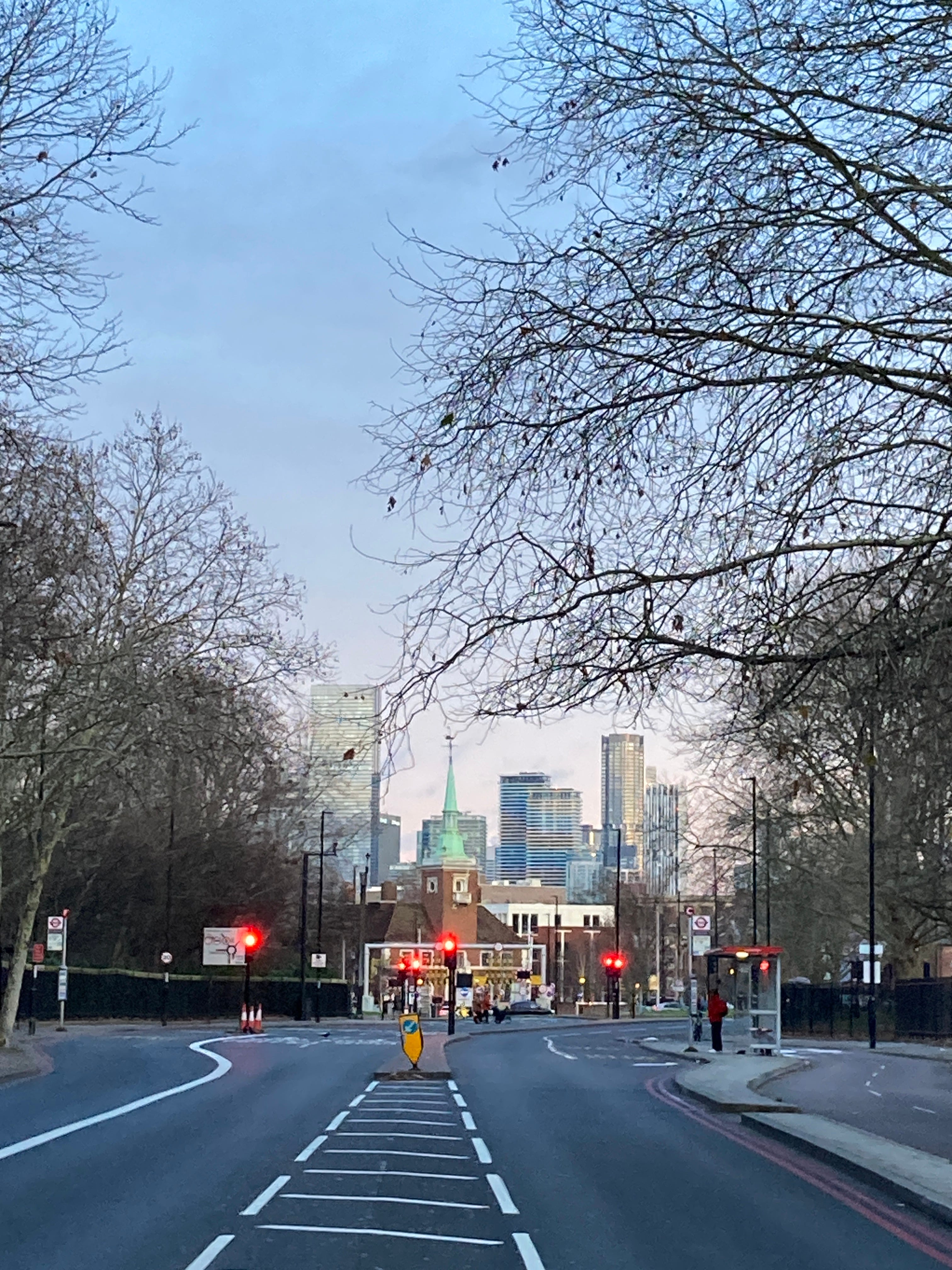
One of the things that surprised me when I first moved to London was how it felt more, not less, ordinary, more, not less, unselfconscious, than other places. In the first week after moving I went to a poetry reading, cycling from south-east London across Tower Bridge just after sunset. At the reading I asked a friend if it got old, the feeling of excitement, the sublime of the metropolis, crossing the Thames at night, and he said that it didn’t. Love has come to feel similar. A lot of things that I previously found extraordinary, hardly likely ever to happen if not outright impossible, have become ordinary, and, as I say, their very ordinariness is itself the surprise; the day-to-day experience is not one of intensity and difficulty, a constant standing outside of oneself looking on, but something calm, a taking for granted, even, of things that I previously took to be remarkable. But at the same time, it doesn’t and – I hope – won’t get old.